
Heat Exchangers & How They Work: What Every Oregon Homeowner Should Know
Give us a call today: 503-254-1274
When it comes to your furnace or HVAC system, there’s one component that quietly does some of the most important work behind the scenes: the heat exchanger. You don’t see it, you don’t interact with it; but without it, you’d be layering up indoors all winter long.
Let’s break down what a heat exchanger actually does, how it works, and why it’s a big deal for the safety, efficiency, and comfort of your home. A heat exchanger works by allowing two fluids or air streams to exchange heat, with the temperature difference between them serving as the driving force for heat transfer. This process is essential for efficient heating and cooling in your system.
Heat exchangers can also be classified according to their flow arrangement into parallel-flow, counter-flow, and cross-flow configurations, which will be discussed in more detail in the following sections.
What Is a Heat Exchanger?
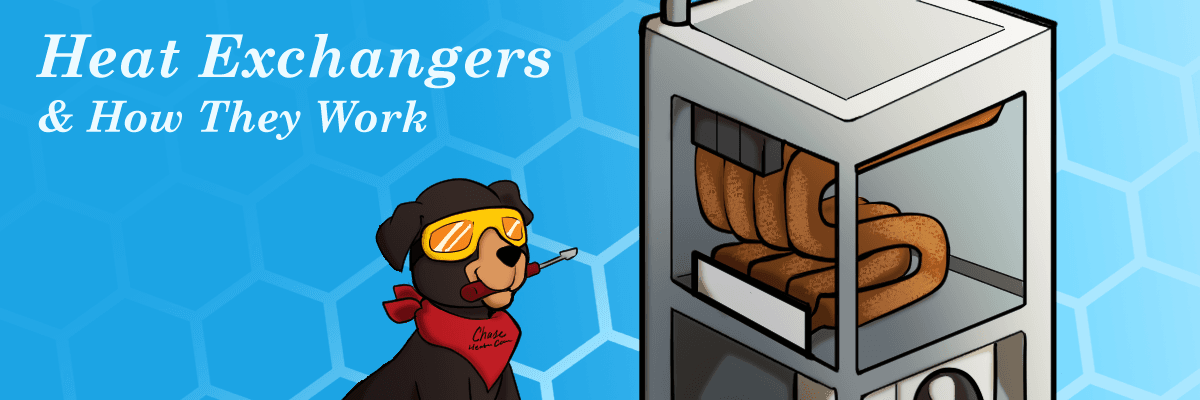
In simple terms, a heat exchanger is the part of your furnace that transfers heat from the combustion process to the air that blows through your vents. Units employ heat exchangers to transfer heat from the hot gas produced by combustion to the air, ensuring that toxic combustion gases do not mix with indoor air.
Think of it like a metal “bridge” that gets heated up by the burner flame. Air flows across the outside of the metal walls, picking up the heat and becoming heated air (or hot air) that is then circulated through your home; while all the harmful combustion gases, including toxic combustion gases, stay sealed safely inside the exchanger and are vented outside.
Shell and tube heat exchangers consist of a series of tubes, with one fluid flowing through the tubes and another fluid flowing outside the tubes within a shell, keeping the fluids separate while allowing heat transfer. Plate heat exchangers use multiple thin metal plates stacked together to create independent flow channels for two different fluids, also preventing mixing while enabling efficient heat exchange.
Types of Heat Exchangers
Heat exchangers come in a variety of shapes and sizes, each designed to transfer heat efficiently between hot and cold fluids or air streams. While you might not see them, these devices are hard at work in everything from your home’s furnace to air conditioning systems and even water heaters. Here are some of the most common types you might hear about:
1. Tube Heat Exchangers (Shell and Tube Exchangers):These are among the most widely used heat exchangers, especially in larger HVAC and industrial systems. A shell and tube exchanger consists of a bundle of tubes (the “tube side”) enclosed within a larger shell. One fluid flows through the tubes, while another flows around them inside the shell. The two fluids never mix, but heat transfers through the tube walls. This design is great for handling high pressures and temperatures, and it’s known for its durability and efficient heat transfer surface.
2. Plate Heat Exchangers:Plate heat exchangers use a series of thin, corrugated metal plates stacked together. Hot and cold fluids flow in alternating channels, allowing for a large surface area in a compact space. This design makes them highly efficient at transferring heat, and they’re often found in modern HVAC systems, including some air conditioning and heat pump units. Plate exchangers are especially good for applications where space is limited and quick heat exchange is needed.
3. Air Cooled Heat Exchangers:Instead of using water or another liquid to remove heat, air cooled heat exchangers rely on ambient air. Fans blow air across finned tubes or coils, carrying away heat from the hot fluid inside. You’ll find this type in air conditioner outdoor units and some heat pumps, where removing heat to the outside air is essential for cooling your home.
4. Regenerative Heat Exchangers:These exchangers temporarily store heat from a hot fluid and then transfer it to a cold fluid in a repeating cycle. They’re often used in specialized applications, like heat recovery systems, where capturing and reusing heat energy can boost overall energy efficiency.
5. Other Types:There are also simple heat exchangers like the heat pipe, which uses phase changes of a fluid to move heat quickly from one end to the other, and tubular heat exchangers, which are similar to shell and tube but often used for smaller-scale or specific applications.
No matter the type, the goal is always the same: to transfer heat efficiently from one fluid or air stream to another, keeping your home comfortable and your energy bills in check. Understanding the different heat exchanger types can help you appreciate the technology behind your HVAC system and make informed decisions about maintenance or upgrades.
How Heat Transfer Works: The Basics
Here’s a quick step-by-step:
- Burner Ignites: Your gas furnace burns fuel in the combustion chamber to create heat.
- Heat Rises Through the Exchanger: The exchanger, typically made of metal, heats up as the hot exhaust gases pass through it.
- Fan Blows Air Over the Exchanger: A fan pulls in cold indoor air, blows it across the hot exchanger, and circulates that warm air throughout your home. Cold air is drawn in and heated before being distributed. In air conditioning systems, heat exchangers such as evaporator coils and cooling coils use a cool liquid to absorb heat from indoor air, producing cooled air that is circulated inside.
- Exhaust Is Vented Out: All harmful exhaust gases from the combustion process are funneled out of your house through a flue pipe. The combustion chamber is where fuel is burned to create these hot gases.
Heat exchangers are also used in water heaters, where hot water is produced by transferring heat from a burner to the water. In refrigeration cycles, the expansion valve regulates refrigerant flow before it enters the heat exchanger, optimizing heat transfer. Car radiators are another example of heat exchangers, cooling engine coolant by transferring heat to the air. Additional heat can be managed or introduced in complex heat exchange systems to improve performance.
It’s elegant, efficient, and incredibly important.
Why You Should Care About Your Heat Exchanger
Here’s the deal: cracks or damage in your heat exchanger can pose serious safety risks. A cracked heat exchanger is a dangerous condition that can allow combustion gases, including carbon monoxide, to leak into your home; and that’s a risk no family wants to take.
Plus, a failing heat exchanger means lower efficiency and higher utility bills. That’s why regular maintenance matters, and why heating pros (like us at Chase Heating) always inspect the exchanger during annual tune-ups
Do You Need to Replace a Cracked Heat Exchanger?
Not always; but sometimes. Heat exchangers can last 15–20 years, but issues like metal fatigue, corrosion, or overheating can cause premature failure. Heat loss and fouling can also reduce the efficiency of heat exchangers over time, as fouling decreases heat transfer effectiveness.
If your technician spots cracks, rust, or signs of carbon buildup, it might be time for a replacement; or even a new furnace altogether, depending on the age and condition of your system. Efficient heat exchangers are designed to minimize heat loss and provide uniform heating throughout the home, ensuring optimal performance and energy savings.
Takeaway: Keep Your System Safe with Efficient Heat Exchangers
Your heat exchanger works hard every day of the heating season. Give it the attention it deserves! Here’s what we recommend:
- Schedule regular furnace inspections
- Be alert to signs like strange smells, yellow burner flames, or rising energy bills
- Call us if your CO detector goes off; or if your system just isn’t keeping up
Questions About Your HVAC System?
Whether you want peace of mind, an expert inspection, or it’s just been a while since your last tune-up; we’re here to help. Chase Heating is Oregon City’s trusted HVAC team, and we treat every home like it’s our own.Want us to take a look? Reach out today »
How Can We Help You?


See What Our Community Has to Say