
Is a Little Condensation Normal, or Is My System Leaking?

Give us a call today: 503-254-1274
You go to grab something out of the closet or utility room, and there it is: a puddle of water on the floor near your indoor unit. Before you panic (or start Googling “how much does a new furnace cost”), take a breath. In a lot of cases, this is your system doing something completely normal. In other cases, it’s an early warning sign worth paying attention to. Here’s how to tell the difference.
Why Your Air Conditioner Produces Water in the First Place
Your indoor air handler has a cold surface running through it: the evaporator coil. As warm, humid indoor air passes over that cold evaporator coil, moisture in the air condenses on it, the same way a cold glass of lemonade sweats on a warm day. That moment when the air temperature drops below the dew point is what turns water vapor into liquid.
That condensation is supposed to happen. It’s actually part of how your air conditioning system removes humidity from your home while it cools. The moisture collects on the coil, drips down into a condensate pan underneath, and drains away through a small condensate drain line (usually a small PVC pipe that runs to the exterior of your home or into a nearby floor drain).
On a hot, humid Oregon summer day, a typical residential HVAC system can pull somewhere between 5 and 20 gallons of water out of the air in a single day. All of that water needs to exit the home through the drainage system. When it does, you’re fine. When it can’t, that’s when leaking water shows up where it shouldn’t.
How Much Water Is Normal for an AC Unit?
A little bit of moisture is completely expected. Here’s a simple way to think about it:
- Normal: Light condensation on the refrigerant lines or the outside of the cabinet, especially during hot, humid weather. A damp (not dripping) drain line. A small drip or puddle near where the condensate line exits the house outside.
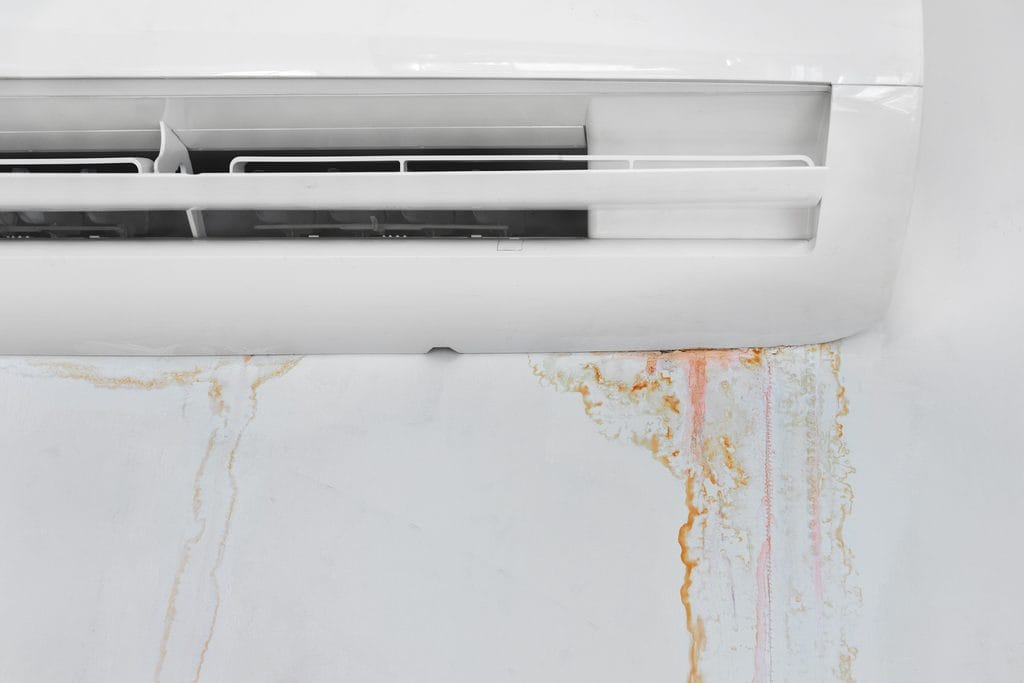
- Not normal: Standing water on the floor, water stains on the ceiling below an attic-mounted unit, a musty smell nearby, or a condensate drain pan that’s visibly overflowing.
If what you’re seeing falls into that second category, something in the condensate removal process has broken down.
What’s Actually Causing the Leaking Water
Water pooling around an AC unit almost always comes down to one of these causes.
Clogged Condensate Drain Line
A clogged drain line is the most common reason for a leaking AC unit. The condensate drain line is dark, damp, and full of organic material — a perfect place for algae, mold, and biofilm to grow. Over a season or two, that buildup narrows the line until water can no longer pass through. The clogged drain line sends water backward into the drain pan, and once the pan fills, it spills onto the floor.
A wet/dry vacuum on the outdoor end of the condensate drain line can clear many soft clogs. For a stubborn clog or anything you’re not comfortable diagnosing yourself, a technician can clear the drain line and inspect the rest of the system.
Damaged Drain Pan
The condensate drain pan sits directly beneath the evaporator coil inside the air handler. Over time — especially in older HVAC units with metal drain pans — the pan can rust, crack, or develop small holes. Once there’s a damaged drain pan, water finds the fastest way down, and that’s usually not through the drain line. Replacing a cracked or rusted drain pan is a straightforward repair, but it does require accessing the indoor unit.
Dirty Air Filter
A clogged air filter restricts airflow across the evaporator coil. When airflow drops too low, the coil gets too cold and begins to ice over — a frozen evaporator coil. When that ice eventually melts, it can produce more water than the drain pan and drain line are designed to handle at once. The result is a puddle that seems to appear out of nowhere when the system runs.
If you notice the area around your indoor air handler is wet primarily in the morning or after the system has been off for a while, a frozen coil is worth checking for. And the first thing to check is always the air filter.
Low Refrigerant
Low refrigerant can also cause the evaporator coil to freeze. When refrigerant levels drop below the correct charge, the coil gets colder than it should, ice forms, and when the ice melts, water leaks from the unit. Low refrigerant isn’t something you can top off yourself — it usually means there’s a leak in the system that needs to be found and repaired by a licensed HVAC professional before adding refrigerant.
A Failed or Disconnected Drain Line
If the condensate drain line was ever bumped, damaged, or wasn’t sloped correctly during installation, water won’t drain the way it’s supposed to. A disconnected line at the air handler can send water directly onto the floor before it ever reaches the drain pan. This is especially common in systems that have been moved or serviced without careful attention to how the drain was reconnected.
A Dead or Stuck Condensate Pump
Units installed in basements or other areas without a gravity drain often rely on a small condensate pump to push water up and out of the home. If the condensate pump fails or gets stuck, water backs up quickly. This is easy to overlook because the pump is a small component that doesn’t get much attention during routine visits.
The Float Switch: Your HVAC System’s Built-In Safeguard
Many modern HVAC systems include a float switch in the condensate drain pan. When water backs up and the level in the pan rises too high — usually because of a clogged drain line — the float switch trips and shuts the system down before the pan can overflow.
If your AC unit suddenly stops running and you can’t figure out why, check the drain pan. A full pan and a tripped float switch is often the cause. It’s the system protecting your home from water damage, not a catastrophic failure. Clear the clogged drain line, empty the pan, and the float switch should reset on its own.
What to Check Before Calling a Technician
A few things you can safely look at yourself before picking up the phone:
- Check your air filter. If it’s dirty, replace it. This alone solves the problem more often than you’d think, and it’s the right first step regardless of what else you find.
- Look at the condensate drain line outside. The outdoor end of the line is usually a small PVC pipe near your outdoor AC unit or where the pipe exits the house. If water is dripping from it steadily while the system runs, that’s normal. If nothing is coming out at all during a long cooling cycle, the drain line may be clogged.
- Check the condensate pan. Look for visible cracks, rust, or standing water that isn’t draining.
- Note when it happens. Is it only during heavy AC use? Only after a hot stretch of weather? Only in the mornings? That pattern helps a technician diagnose the issue faster.
If you’ve checked those and the puddling continues; or if you can’t safely access the unit to check at all; that’s your cue to call in a professional rather than keep mopping up water every few days.
How to Prevent Drain Line Clogs Before They Start
Once you’ve dealt with a clogged condensate drain line, the last thing you want is to deal with it again. A few simple habits can prevent most clogs.
Replace air filters regularly. Air filters should be changed every one to three months depending on your system and household. Dirty air filters lead to frozen evaporator coils, which create overflow situations the drain system isn’t designed for.
Flush the drain line periodically. Pouring a quarter cup of distilled white vinegar into the condensate drain line access port every few months during cooling season can slow algae and biofilm buildup before it becomes a clog. Some HVAC manufacturers recommend this as part of basic maintenance. If you’re not sure where the access port is on your system, a technician can show you during a maintenance visit.
Watch for early warning signs. A musty smell near your indoor air handler, water pooling around the unit, or the AC shutting off unexpectedly are all signs to look into before the situation gets worse.
When to Call a Professional
Some condensate issues are simple enough to handle yourself: replacing a dirty air filter, clearing a soft clog with a wet/dry vacuum on the outdoor end of the drain line. But a few situations call for professional help.
Call a professional if:
- The clog won’t clear after a basic DIY attempt
- You notice water stains on ceilings or walls near the air handler — this means water has been going somewhere it shouldn’t for a while, and you’ll want to understand the full scope
- You see ice forming on the refrigerant lines or on the unit itself
- The system is shutting down on its own with no obvious cause
- You suspect low refrigerant
- You don’t have safe access to the unit to inspect it yourself
Standing water near electrical components isn’t just a mess — it’s a shock and mold risk. Water damage that isn’t caught early can also affect your home’s structure. If you’re seeing consistent water leaks, addressing it sooner is almost always cheaper than waiting.
A Quick Word on Mold Growth
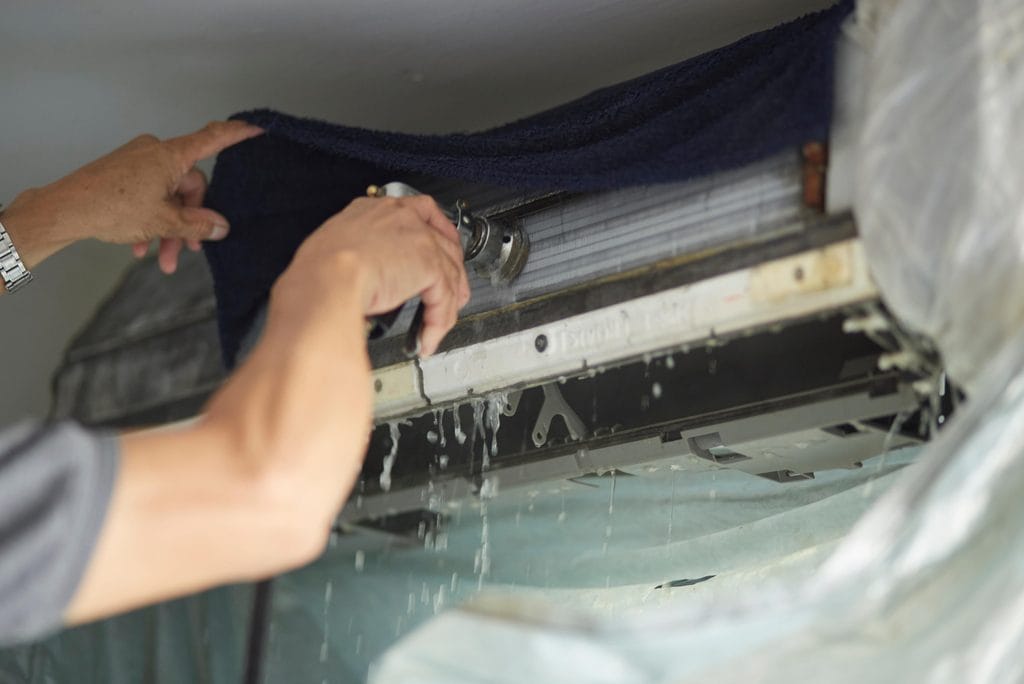
Water that sits in a drain pan or pools under an air handler for any length of time creates conditions for mold growth. In Oregon’s already-damp climate, mold can establish quickly in a warm, wet environment. Beyond the structural and air quality concerns, mold inside an HVAC system can circulate spores through the home every time the system runs.
If you’ve had a water leak from your AC unit that went unnoticed for a while, it’s worth having a technician inspect not just the drainage system but the surrounding area and the interior of the air handler.
The Bigger Picture
A lot of condensate issues are the kind of thing that get caught during a routine seasonal check before they ever turn into a puddle on your floor. It’s one of the reasons regular maintenance pays for itself: a technician can flush the drain line, inspect the pan, and catch early signs of trouble long before you’re dealing with water damage or a mold smell in your utility closet. If you’re not already on a regular maintenance schedule, our Comfort Care Club is built exactly for this: catching the small stuff before it becomes the expensive stuff.
Frequently Asked Questions
Is it normal for my AC to leak water?
A small amount of condensation near the outdoor drain line exit is normal. Standing water on the floor near the indoor unit, water stains on ceilings or walls, or an overflowing drain pan are not normal and should be addressed. Most cases of a leaking AC unit come down to a clogged condensate drain line, a dirty air filter, or a damaged drain pan.
What does air duct cleaning typically cost?
For a leaking AC unit specifically, drain line cleaning typically runs in the range of $150 to $250. If a drain pan needs replacement or refrigerant is involved, the cost goes up. Your technician should be able to give you a clear number after a brief inspection.
What are the signs your AC is leaking water?
The most common signs include a puddle near the indoor air handler, water stains on the ceiling below an attic unit, a musty smell near the unit, ice forming on the refrigerant lines or the coil, or the AC shutting down unexpectedly (which may indicate a tripped float switch).
How often should I clean my AC drain line?
Flushing the condensate drain line every three to six months during cooling season is a good preventive habit for most systems. Some manufacturers recommend doing it monthly. If your system has had recurring clogs, more frequent attention is worthwhile.
What happens if AC water leaks are ignored?
Ignored water leaks from an HVAC unit can cause water damage to floors, walls, and ceilings. They create ideal conditions for mold growth, which can affect indoor air quality. They can also damage the air handler itself, leading to more costly repairs down the line. Catching a leak early is almost always the less expensive path.
Can low refrigerant cause my AC to leak water?
Yes. When refrigerant levels are too low, the cold evaporator coil can freeze over. When that ice melts — typically when the system cycles off or the airflow restriction is removed — the water can overwhelm the drain pan. Low refrigerant is a sign of a leak in the system and requires a licensed professional to diagnose and repair.
What is a float switch and why did it shut my AC off?
A float switch is a safety device in the condensate drain pan. When the drain line is clogged and water backs up, the float switch rises with the water level and cuts power to the HVAC unit before it can overflow. If your AC stops working and you find a full drain pan, that’s likely why. Clear the clogged drain line, allow the pan to drain, and the system should restart normally — though it’s worth having a technician confirm the line is fully clear.
Still Seeing Water?
If you’ve gone through the checklist above, FAQs, and you’re still finding puddles, don’t wait on it. Give us a call at 503-254-1274 or request service online, and we’ll figure out exactly what’s going on.
How Can We Help You?


See What Our Community Has to Say